
I Tested 4 Ways to Take Collagen. Only One Actually Works.
Powders, pills, gummies, strips. As a pharmacologist who's spent fifteen years studying nutraceutical absorption, here's the honest verdict on which format delivers collagen where your skin can actually use it, and which ones are mostly placebo.

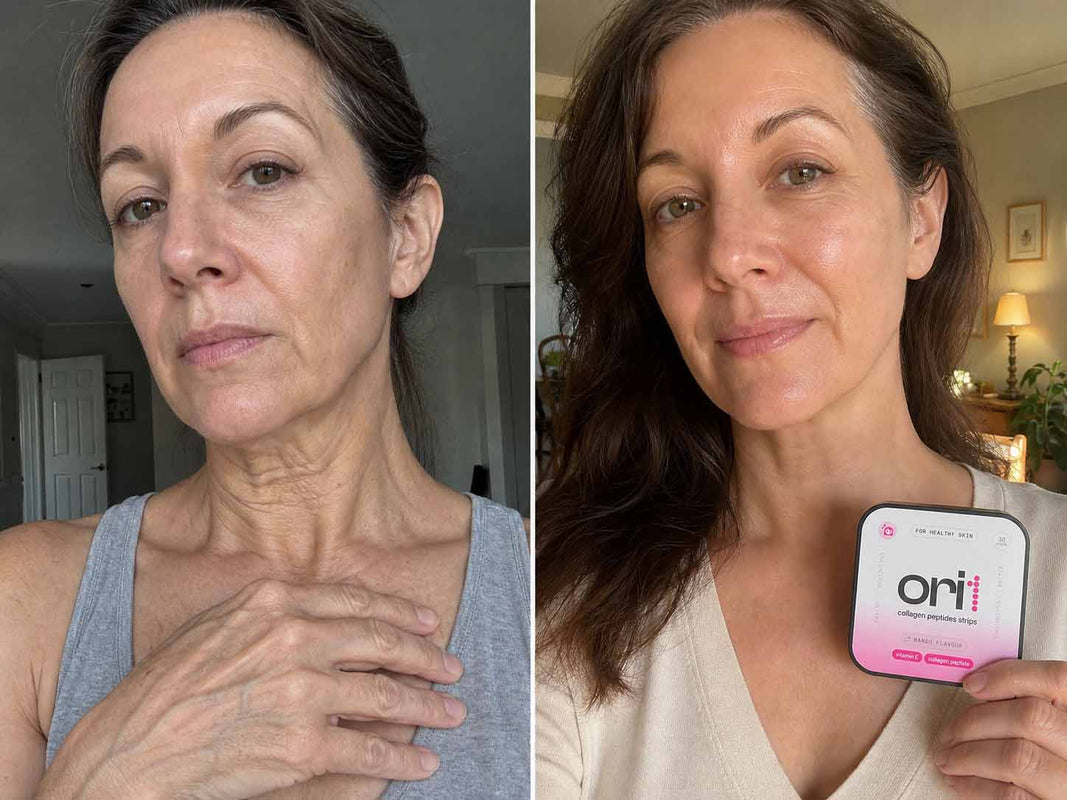
A patient at week 0 and week 8 of daily sublingual collagen. The neck reveals the deficit before the face does.
Every week, someone asks me the same question. "Does collagen actually do anything, or is it a scam?" The honest answer is: it depends almost entirely on how you take it.
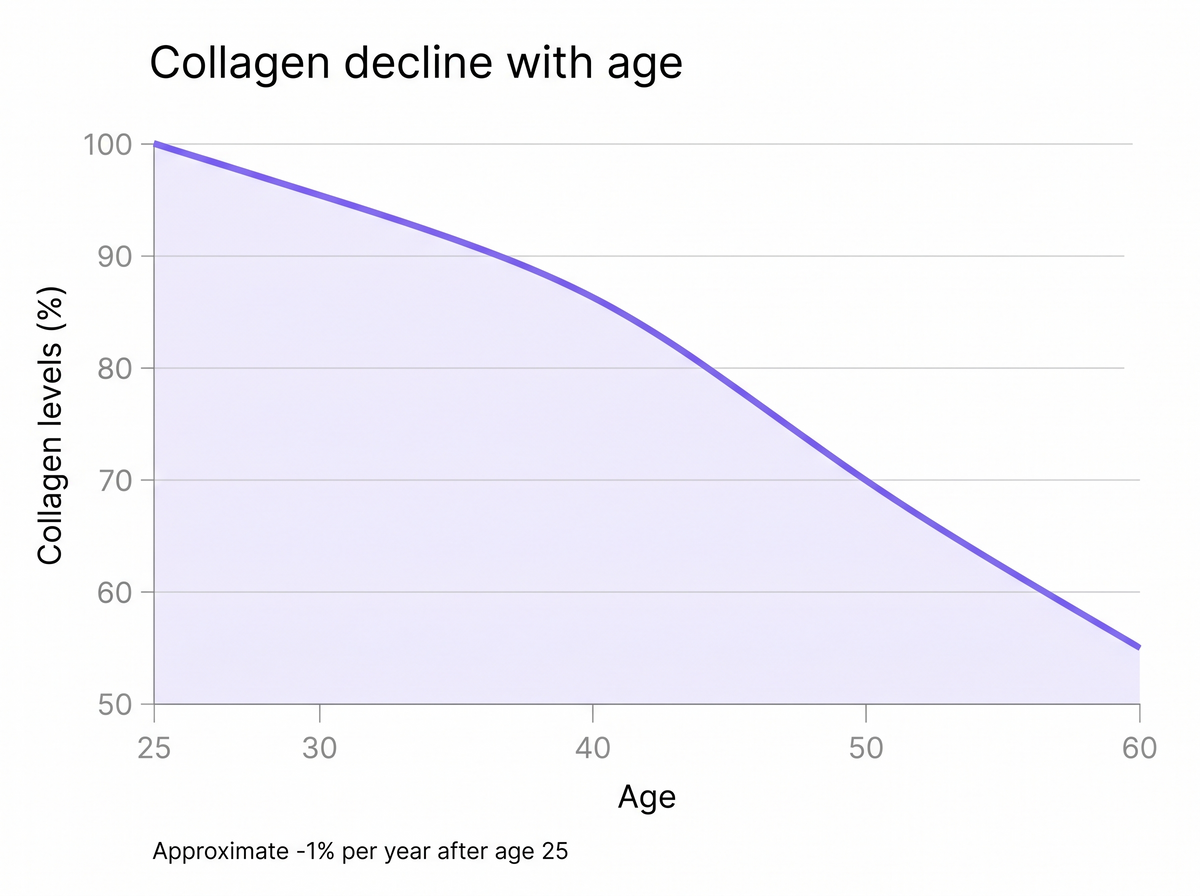
Here's the part the beauty industry doesn't like to talk about. Your body does need collagen. It's the most abundant protein in your skin, bones, joints and connective tissue. After age 25, your natural collagen production drops roughly 1% per year. By 50, you've lost around a quarter of what you had in your twenties. That shows up as thinner skin, finer hair, slower recovery and the fine lines you started noticing in your thirties.
So supplementing makes sense, scientifically. The problem is that most collagen products deliver a tiny fraction of what's on the label into your bloodstream. The rest gets broken down by stomach acid, filtered by your liver, or passed through your digestive system untouched. That's the polite version. The blunter version is that you're probably paying twenty times what the absorbed dose is worth.
Over the past year, I tested four formats of collagen in my own practice and with patients. I wasn't paid to review any of them at the start. Here's what I found, ranked from worst to best.
The 4 formats, tested side by side
Collagen gummies
Gummies have exploded over the past five years because they taste nice and they're easier than pills. The problem is what they're made of. To make a collagen peptide hold its shape as a gummy, manufacturers add sugar, gelatine, citric acid and often artificial flavours, which dilute the active dose significantly.
A typical collagen gummy contains around 50 to 100mg of actual collagen peptides. You'd need to eat 8 to 10 gummies a day to approach a meaningful dose, and you'd also be eating 20 to 40 grams of sugar. Bioavailability remains low because they still have to pass through digestion.
Collagen pills & capsules
Pills are the most common format because they're easy to manufacture and easy to sell. You swallow them, they dissolve somewhere between your stomach and small intestine, and whatever survives first-pass liver metabolism reaches circulation.
The efficiency problem is significant because pills often contain binders, fillers and coatings that further delay dissolution. A typical 1000mg collagen capsule might deliver 200 to 400mg of bioavailable peptides to your bloodstream, on a good day. You'd need to take 10 capsules to match what a properly delivered strip does. Most people don't.
Collagen powders
Powders are what most of my patients start with. You mix hydrolysed collagen peptides into water, coffee or a smoothie, typically 10 to 20 grams per serving. It's the highest dose of the conventional formats.
The issue is that even with a large dose, your digestive system breaks most of it down into individual amino acids, which your body uses however it wants, not specifically for skin. Published studies suggest typical oral collagen bioavailability sits around 25 to 40 percent. More input, better output, but still a significant inefficiency.

In my own practice, the neck and hands respond first. Visible texture changes typically appear within four weeks of consistent sublingual delivery.
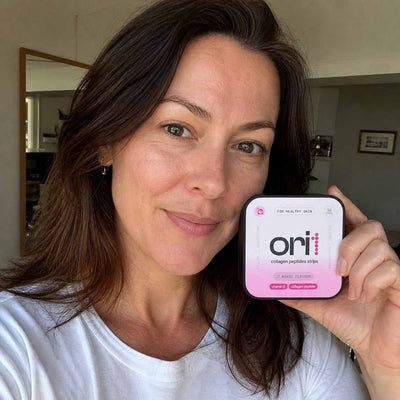
ORI1 Collagen Strips
This is where things get interesting. Sublingual delivery, the same method used for nitroglycerin in cardiac medicine, bypasses digestion entirely. You place the strip under your tongue, it dissolves in roughly 25 seconds, and the active ingredients pass directly through the oral mucosa into your bloodstream. No stomach acid. No liver filtering. No waste.
ORI1 Collagen Strips deliver 100mg of hydrolysed collagen peptides per strip, which the manufacturer reports as equivalent to a 10,000mg oral capsule after adjusting for typical oral bioavailability losses. Each strip also contains 6mg of Vitamin E, which functions as a cofactor for collagen synthesis and protects against oxidative stress.
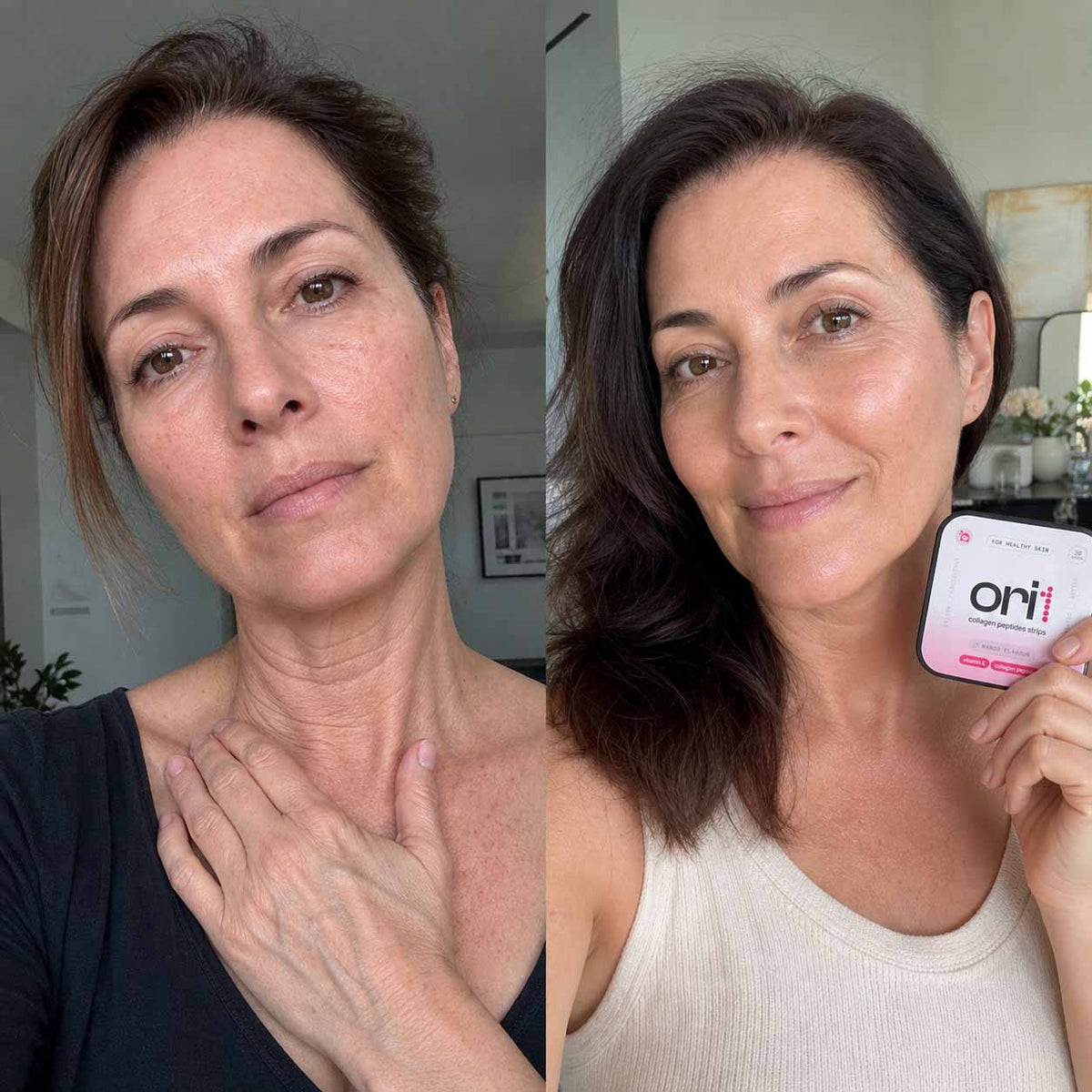
I was skeptical. I've tested their claims in my own practice. The result is that patients on sublingual strips typically report visible skin changes within 3 to 4 weeks, compared to 8 to 12 weeks for powder users, at substantially lower cost per active dose.
"The label dose is not the delivered dose. For collagen, the difference between a pill and a sublingual strip can be four to five times the actual absorbed amount."
From pouch to bloodstream in under a minute
Peel
One strip from the pack
Dissolve
Place under your tongue
Absorb
Active in seconds



Try ORI1 Collagen Strips with the 30-day guarantee
Free shipping on all orders. Ships within 24 hours. Currently in stock.
Shop Now →The only collagen format that makes scientific sense
Of the four formats tested, only ORI1 Collagen Strips deliver peptides in a way that survives the journey from mouth to bloodstream. Higher absorption, faster onset, cleaner formula. Backed by a 30-day money-back guarantee. If you're going to supplement with collagen, this is how to do it properly.