
Why Your Concealer Isn't Working: The Iron Connection Most Doctors Miss
As a pharmacologist, I've spent the last decade watching patients spend hundreds on eye creams that won't work, because they're treating the wrong thing. Here's what's actually causing your dark circles, and the one fix that addresses the root cause.

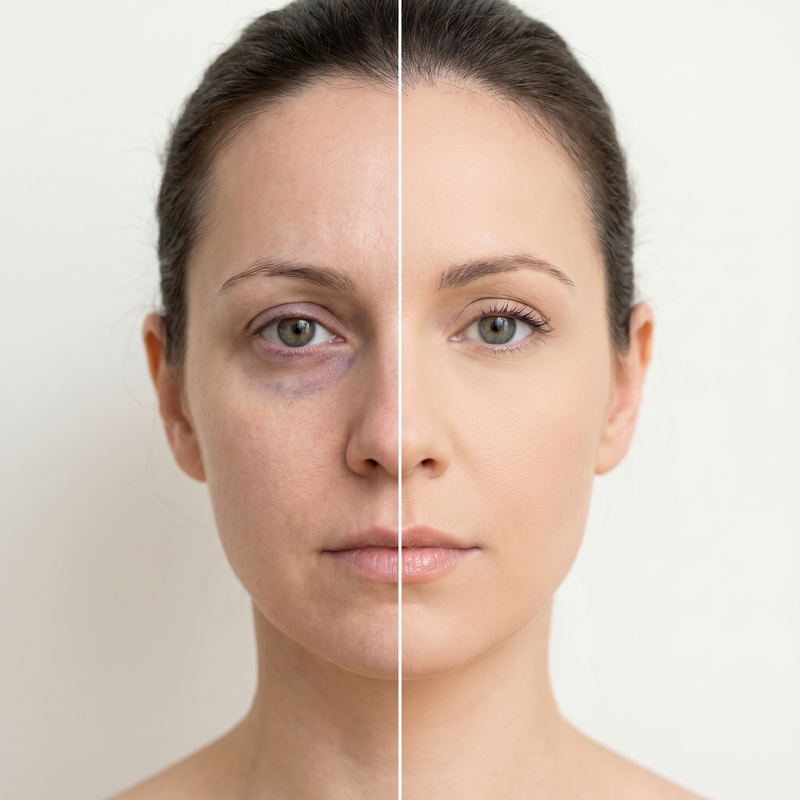
Cosmetic vs cause: most dark circles aren't fixed by what goes on top.
Every week, a patient sits in my office and asks me the same question. "Why won't my dark circles go away?" They've tried five concealers. They've tried sleep. They've tried cucumber slices and $80 eye creams. And nothing works. The reason is almost always the same, and it has nothing to do with their skincare routine.
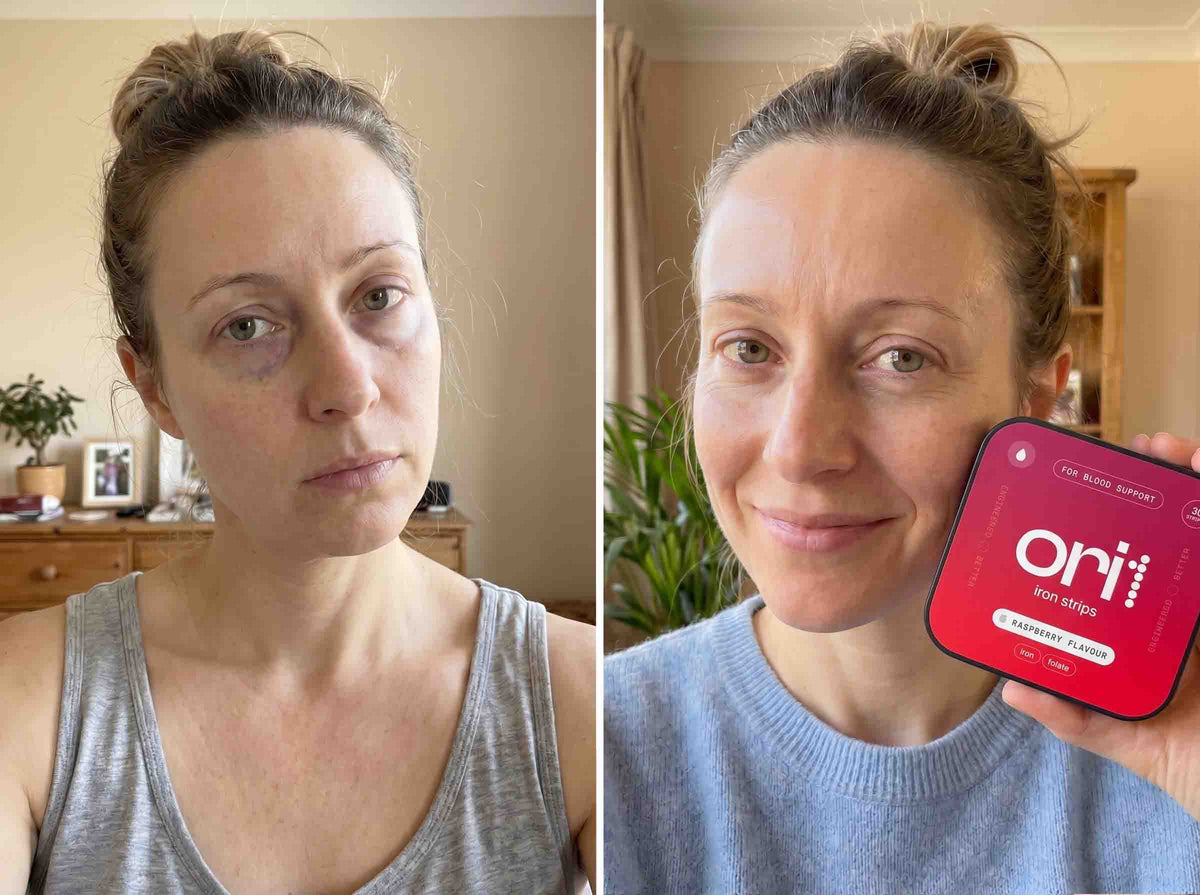
Iron deficiency is the most under-diagnosed cause of persistent dark circles in women under 50. When your iron levels drop, your blood carries less oxygen. Your skin becomes thinner and paler, especially in the delicate area under the eyes where the skin is already 4 times thinner than the rest of your face. The blood vessels underneath start showing through. That bluish-purple shadow you're trying to cover? That's not tiredness. That's haemoglobin showing through translucent skin.
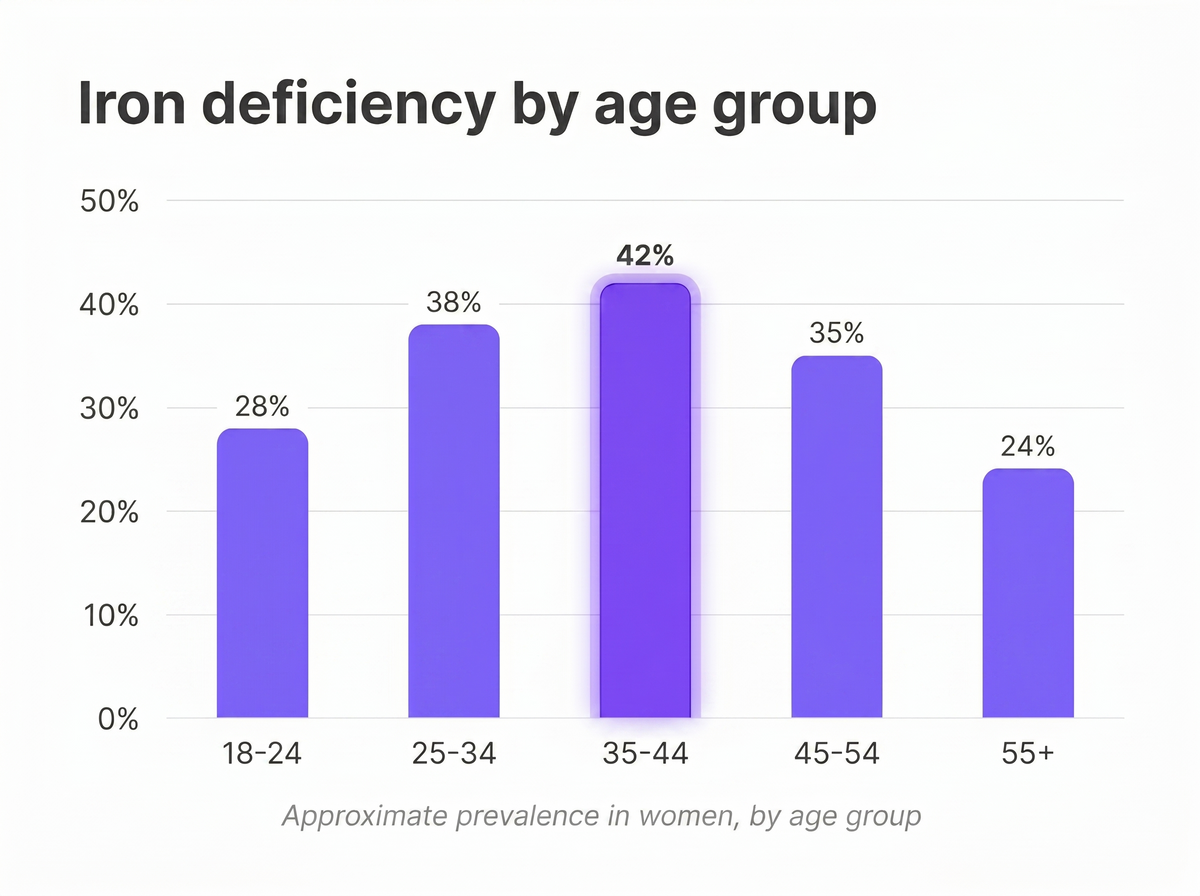
Concealer covers it. Sleep doesn't fix it. Eye creams target the surface, not the cause. And here's the part most people don't know: even iron tablets often don't help. They have to pass through your stomach acid and digestive system, where most of the dose gets degraded or simply not absorbed. Studies show typical oral iron bioavailability sits below 20 percent. That's why so many women take iron tablets for months and see no change in their skin.
Over the past year, I've worked with patients trying every approach to fading their dark circles. Here's what I found, ranked from least to most effective.
What I tell my patients to do instead
Concealer & makeup
Concealer is what most women reach for first. It covers the visible shadow, gives you 30 seconds of relief in the mirror, and gets you through the day. The problem is that you're treating the symptom, not the cause. By 4pm the makeup creases, by evening it has migrated, and tomorrow morning the circles are right back where they started.
Worse, the daily reapplication can clog the delicate skin under the eyes and cause irritation in some women. You're spending money to mask a deficiency, not to fix it.
Iron tablets & capsules
Iron tablets are the standard recommendation. You take one a day, the body slowly absorbs what it can, and the rest passes through. The issue is that ferrous sulphate and similar oral iron formulations have notoriously poor bioavailability. Most studies place absorption between 10 and 20 percent, depending on the form and what you eat alongside it.
There's also the gastrointestinal cost. Iron tablets are well documented to cause stomach upset, nausea, constipation and dark stools in a significant portion of users. Many of my patients abandon them within weeks because of side effects, often before levels have had time to rise meaningfully.
Eye creams (caffeine, vitamin K, retinol)
Eye creams are the most popular non-makeup approach. The premium ones contain ingredients with real evidence behind them: caffeine to constrict superficial vessels, vitamin K to support skin healing, retinol to improve skin texture over time. Used consistently, they can make a modest difference, especially for surface-level dryness or fine lines.
But here's the limit. Eye creams work topically. They don't reach blood circulation, they don't change iron levels, and they don't address why the skin became thin and translucent in the first place. They treat symptoms, not the underlying deficiency. For dark circles caused by iron status, no cream alone will close the gap.
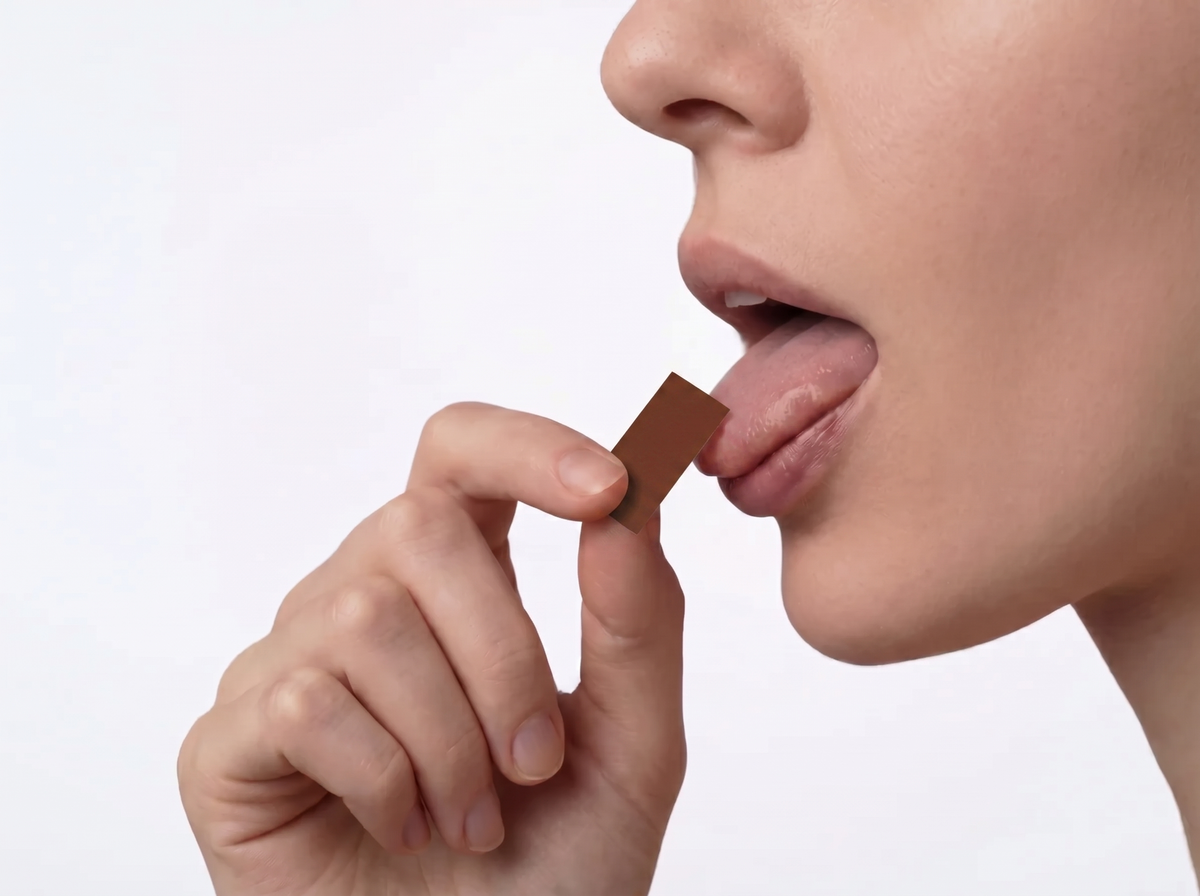
A single ORI1 iron strip dissolves under the tongue in roughly 25 seconds, delivering iron directly into the bloodstream.
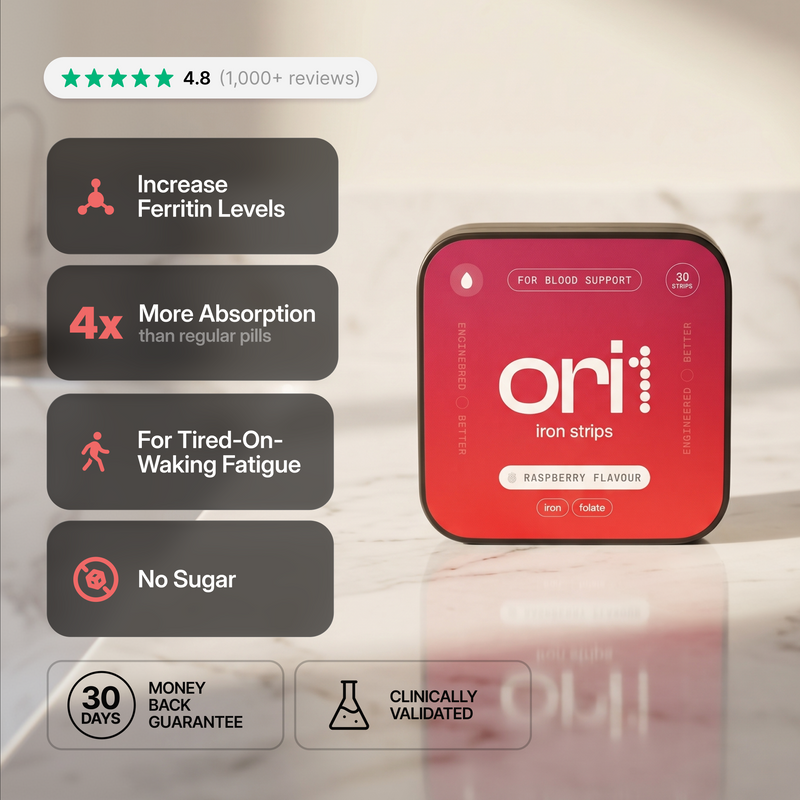
ORI1 Iron Strips
This is where things get interesting. Sublingual delivery, the same method used for nitroglycerin in cardiac medicine, bypasses digestion entirely. You place the strip under your tongue, it dissolves in roughly 25 seconds, and the iron passes directly through the oral mucosa into your bloodstream. No stomach acid degradation. No digestive side effects. No waste.
ORI1 Iron Strips deliver 14mg of bioavailable iron per strip, the daily recommended intake for adult women. They're paired with Vitamin C, the cofactor that helps your body actually use the iron rather than excrete it.
In my practice, patients who switch from oral iron tablets to sublingual delivery typically report visible improvement in skin tone and reduction in dark circles within 4 to 6 weeks, compared to 3 to 6 months with conventional iron tablets, and without the gastrointestinal side effects.
"Most patients with persistent dark circles aren't sleep-deprived. They're iron-deficient. And the moment their iron levels normalise, the circles start fading naturally."
From pouch to bloodstream in under a minute
Peel
One strip from the pack
Dissolve
Place under your tongue
Absorb
Active in seconds
Try ORI1 Iron Strips with the 30-day guarantee
Free shipping on all orders. Ships within 24 hours. Currently in stock.
Shop Now →If your dark circles won't budge, look at iron, not concealer
Of every approach I've tested with patients, only ORI1 Iron Strips address the actual cause: low iron showing through translucent under-eye skin. Higher absorption, no digestive side effects, visible improvement in 4 to 6 weeks. Backed by a 30-day money-back guarantee. If you're going to supplement iron, this is how to do it properly.